What Is Swing Shift? Meaning, Hours, and Benefits Explained
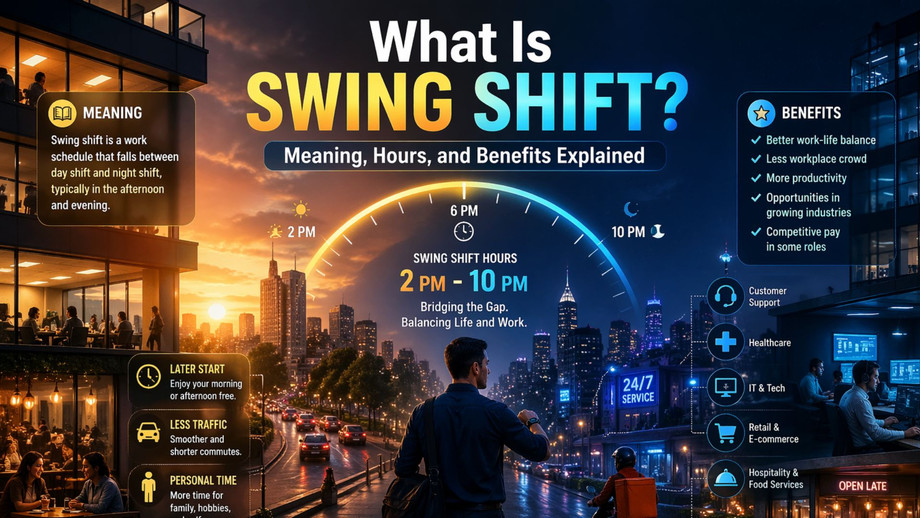
Have you ever wondered how businesses stay operational beyond the standard 9-to-5 schedule? If so, you’re likely curious about what is swing shift and how it fits into modern work culture. Simply put, a swing shift is a work schedule that typically falls between the day shift and night shift usually starting in the late afternoon and ending around midnight.
From healthcare to customer support, many industries rely on this shift to maintain productivity during peak hours. As someone who has worked closely with teams managing varied schedules, I’ve seen how swing shifts can offer both flexibility and challenges depending on how they’re structured and managed.
What Are the Typical Swing Shift Hours?
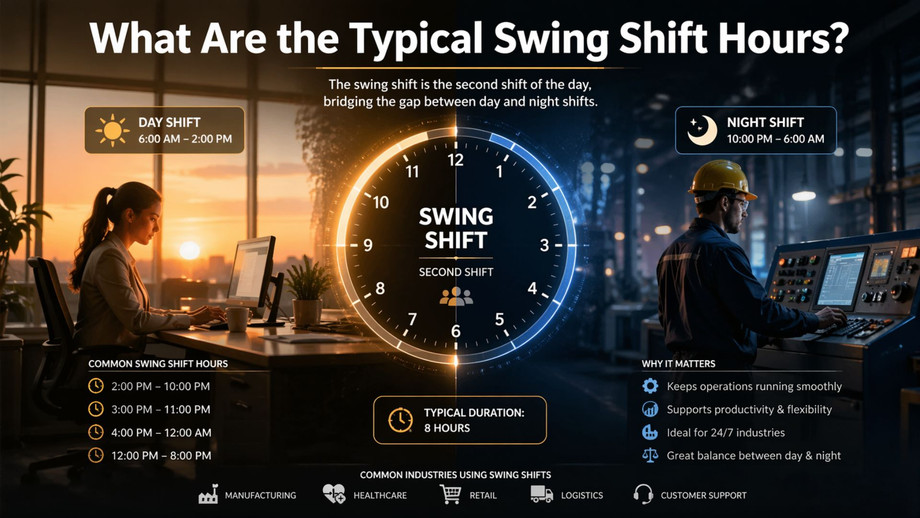
Swing shifts usually cover the time between 3 PM and 11 PM, though this can vary by industry. In sectors like manufacturing or IT support, shifts may start as early as 2 PM or extend until midnight.
Common Variations:
- Standard Swing Shift: 3 PM -11 PM
- Extended Shift: 4 PM - 12 AM
- Rotational Shift: Alternates weekly between day and evening
Practical Insight:
In a BPO environment I consulted for, peak customer queries occurred between 6 PM and 10 PM. Implementing a swing shift improved response time by 28% within three months.
Why Do Companies Use Swing Shifts?
Organizations adopt swing shifts to ensure coverage during high-demand periods without overloading day or night teams. To make the most of this schedule, an Employee checklist can help individuals stay organized, manage sleep cycles, maintain productivity, and balance personal commitments effectively.
Key Reasons:
- Customer demand peaks in the evenings
- Time zone differences in global operations
- Reduced overtime costs
Industry Examples:
- Healthcare: Nurses handle evening patient rounds
- Retail: Staff manage post-work shopping rush
- Tech Support: Teams assist international clients
According to workforce studies, businesses using staggered shifts report up to 20% higher operational efficiency.
Benefits and Challenges of Working a Swing Shift
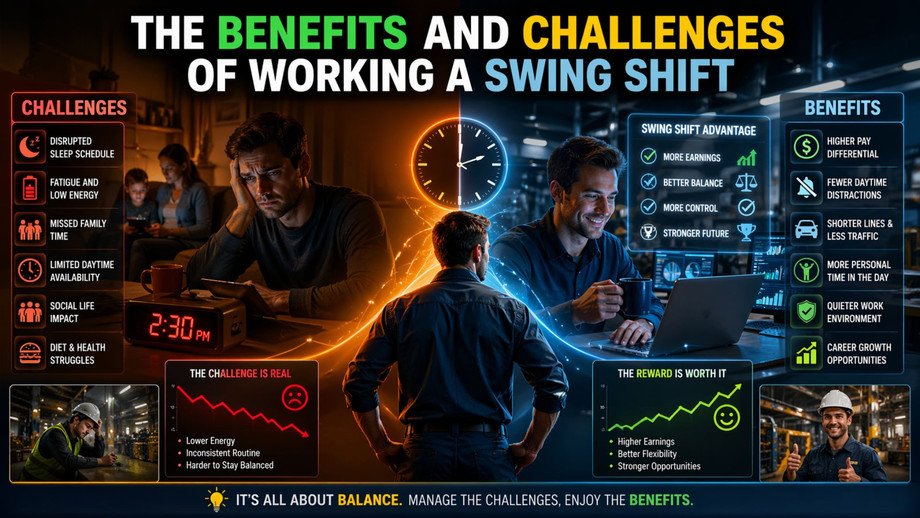
Benefits:
- Less morning stress: No early wake-ups
- Daytime availability: Easier to run errands or attend appointments
- Higher shift differentials: Some employers offer extra pay
Challenges:
- Social limitations: Less overlap with friends/family schedules
- Sleep disruption: Late hours can affect the circadian rhythm
- Limited nightlife or downtime
I’ve seen employees thrive on this schedule when they align it with personal routines, especially those pursuing education or side projects during the day, using that flexibility to stay focused on their work goals while maintaining a balanced lifestyle.
How to Adjust and Thrive in a Swing Shift?
Transitioning to a swing shift requires intentional lifestyle adjustments.
Proven Tips:
- Maintain a consistent sleep schedule (even on days off)
- Use blackout curtains to improve sleep quality
- Plan meals ahead to avoid unhealthy late-night eating
- Stay socially connected through scheduled meetups
One logistics company I worked with introduced wellness programs for evening staff, resulting in a 15% drop in absenteeism.
Is a Swing Shift Right for You?

Choosing a swing shift depends on your lifestyle, responsibilities, and career goals. For students, freelancers, or those with daytime commitments, it can be ideal. However, it may not suit individuals who prioritize traditional routines.
At its core, understanding swing shifts helps you evaluate whether this schedule aligns with your productivity patterns and personal life.
You can also watch:- Emp Monitor | Boost Workplace Productivity with Employee Monitoring Software
Final Thoughts
Understanding different work schedules allows you to make smarter career decisions. What is Swing Shift becomes an important question when you're exploring options that fall between traditional day and night hours. Whether you value flexibility, higher pay, or improved work-life balance, aligning your shift with your lifestyle is key. If you're considering a schedule change, take time to explore your options, test what works best for you, and prioritize your well-being. The right shift isn’t just about hours; it's about how those hours support your life.
FAQs
Q: What is swing shift in simple terms?
A: Swing shift is a work schedule that typically starts in the late afternoon and ends around midnight. It bridges the gap between day and night shifts, ensuring businesses remain operational during evening hours.
Q: How is swing shift different from night shift?
A: Swing shift usually ends before midnight, while night shift begins late at night and continues until early morning. Swing shifts are less disruptive to sleep cycles compared to night shifts.
Q: How do I adjust to working a swing shift?
A: Maintain a consistent sleep routine, eat balanced meals, and manage your time effectively. Using sleep aids like blackout curtains and limiting caffeine late in the shift can also help.
Q: Does swing shift pay more than the day shift?
A: In many industries, swing shifts offer a slight pay differential due to less desirable hours. However, this varies by employer and industry standards.
Q: Is swing shift good for work-life balance?
A: It can be, especially for those who need daytime flexibility. However, it may limit evening social activities, so the balance depends on your personal priorities.
Q: What is the most common mistake people make with swing shifts?
A: The biggest mistake is not maintaining a consistent sleep schedule. Irregular sleep patterns can lead to fatigue, reduced productivity, and long-term health issues.
Comments
Post a Comment