Employees Tracking: How Businesses Improve Productivity and Workplace Accountability
How do businesses know whether work is being completed efficiently? Are employees spending time on important tasks, or are workflow issues slowing down performance? These are common questions for organizations managing growing teams, remote workers, or hybrid workplaces.
In today’s competitive work environment, businesses need clear visibility into employee performance without creating unnecessary pressure. This is where employee monitoring becomes valuable. Employees tracking helps organizations understand attendance, productivity, task progress, and overall workflow efficiency while encouraging better accountability.
Companies are no longer relying only on assumptions or manual supervision. Instead, they use smart systems to identify productivity patterns, improve time management, and create smoother workplace operations. When implemented fairly, employee tracking can benefit both employers and employees by creating clearer expectations and better performance outcomes.
What Is Employee Tracking?
Employee tracking refers to the process of monitoring workplace activities to understand productivity, attendance, project progress, and work habits. Businesses use different digital tools to collect information about how employees spend their working hours and complete assigned responsibilities.
The goal is not simply observation—it is about improving efficiency and helping teams perform better.
Employee tracking can include:
- Time and attendance monitoring
- Task and project management
- Work-hour analysis
- Productivity reporting
- Workflow optimization
- Communication tracking for project coordination
For businesses handling large teams, especially remote employees, tracking systems provide useful insights that would otherwise be difficult to measure.
Why Is Employee Tracking Important for Businesses?
Modern workplaces have changed significantly. Employees now work from offices, homes, and different locations across the world. Managing performance effectively requires systems that provide measurable insights.
Better Productivity Visibility
One of the biggest advantages of employee tracking is understanding how work hours are spent. Managers can identify productivity trends and recognize areas where workflow slows down.
Instead of making assumptions, businesses can rely on accurate data to understand performance.
Improved Accountability
Tracking systems create transparency between employers and employees. Team members understand expectations, deadlines, and performance goals more clearly.
This accountability often encourages employees to stay focused and complete tasks more efficiently.
Better Workforce Planning
Tracking data helps businesses allocate tasks properly and avoid overloading employees. Managers can identify whether workloads are balanced or whether certain processes need improvement.
Accurate Attendance and Payroll
Manual attendance records often lead to errors. Automated systems help organizations maintain accurate attendance logs, overtime records, and leave management, reducing payroll mistakes.
Enhanced Remote Team Management
Remote work offers flexibility, but it can also create management challenges. Employers may struggle to understand team productivity when employees work from different locations.
Tracking solutions help managers maintain visibility while still allowing employees to work independently.
Key Features Businesses Look for in Employee Tracking Tools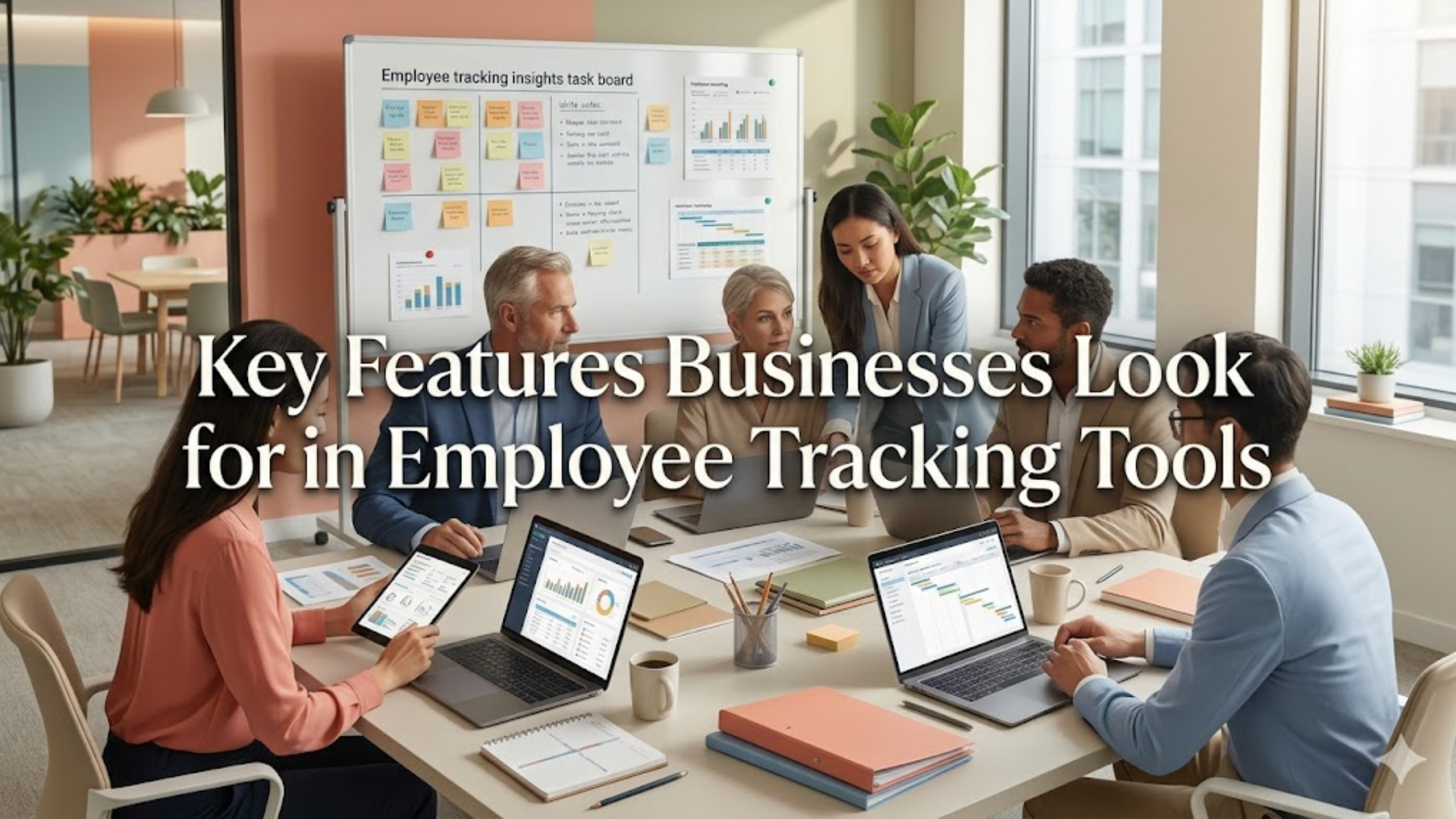
Choosing the right tracking solution depends on business goals and workplace needs. Most organizations prioritize features that improve productivity while maintaining employee trust.
1. Time Tracking
Time tracking tools monitor working hours, breaks, overtime, and schedules. This helps businesses understand how long tasks take and where productivity improvements are possible.
2. Attendance Monitoring
Automated attendance systems reduce manual errors and simplify shift management.
3. Task and Project Tracking
Managers can monitor project progress and identify delays before deadlines are missed.
4. Productivity Reports
Reports provide measurable insights into performance, helping leaders make better operational decisions.
5. Workflow Insights
Businesses often use advanced analytics to understand how teams collaborate and where inefficiencies exist.
To gain deeper visibility into workplace activity, some organizations also implement screen monitoring software to analyze workflow patterns, application usage, and productivity levels in remote or hybrid environments.
Benefits of Employee Tracking for Employees
Employee tracking is often viewed only from a management perspective, but it can also create advantages for employees.
Clear Performance Expectations
Employees understand what is expected from them and can prioritize work more effectively.
Fair Performance Evaluations
Performance reviews become more objective because managers rely on actual data rather than assumptions.
Better Time Management
Tracking systems can help employees identify distractions and improve focus.
Reduced Workplace Confusion
When workflows and deadlines are clearly tracked, employees experience fewer misunderstandings regarding responsibilities.
Challenges of Employee Tracking
Despite its benefits, employee tracking also comes with challenges that organizations must handle responsibly.
Privacy Concerns
Employees may worry about excessive monitoring. Businesses should clearly explain what data is collected and why it matters.
Workplace Stress
Over-monitoring can create pressure and reduce morale if employees feel they are constantly being watched.
Data Security Risks
Tracking systems collect sensitive information, making cybersecurity an important priority.
Overdependence on Metrics
Productivity numbers alone do not always show work quality, creativity, or collaboration. Businesses should avoid measuring performance only through statistics.
Best Practices for Effective Employee Tracking
Companies can make employee tracking more successful by following ethical and practical strategies.
Be Transparent With Employees
Explain monitoring policies openly and answer employee concerns honestly.
Focus on Results Instead of Micromanagement
Tracking should support productivity improvements rather than create unnecessary pressure.
Respect Employee Privacy
Monitoring should remain work-related and avoid personal activities outside office hours.
Use Data for Improvement
Managers should use tracking information to provide coaching, training, and support.
Maintain a Healthy Work Environment
Balance accountability with employee trust to avoid workplace dissatisfaction.
When implemented correctly, employees tracking becomes less about supervision and more about improving teamwork, communication, and overall organizational performance.
The Future of Employee Tracking
Technology continues to reshape workplace management. Artificial intelligence, automation, and advanced analytics are making tracking systems smarter and more efficient.
Future tracking tools may focus more on employee well-being, workflow optimization, and personalized productivity support rather than simply measuring hours worked.
Businesses that adopt balanced and ethical monitoring systems are more likely to improve performance while maintaining positive workplace culture.
You can also watch this video: Emp Monitor | Boost Workplace Productivity with Employee Monitoring Software.
Summary
In modern workplaces, employees tracking helps businesses improve accountability, productivity, and workflow efficiency. By using tracking systems, organizations can better understand employee performance, manage remote teams, and optimize business operations. However, successful tracking requires transparency, trust, and ethical implementation. When businesses focus on support rather than surveillance, employee tracking becomes a valuable tool for long-term growth and workplace success.
FAQ
What is employee tracking?
Employee tracking is the process of monitoring attendance, productivity, task completion, and workplace performance to improve efficiency.
Why do businesses track employees?
Businesses track employees to improve productivity, maintain accountability, manage workflows, and support better operational planning.
Is employee tracking legal?
Yes, employee tracking is legal in many regions if businesses follow privacy regulations and inform employees about monitoring practices.
What are the benefits of employee tracking?
It improves productivity, attendance management, workforce planning, and transparency between employers and employees.
What tools are used for employee tracking?
Businesses commonly use time trackers, attendance systems, productivity tools, project management platforms, and screen monitoring software.
Comments
Post a Comment