What Is Reskilling? Meaning, Benefits, and Why It Matters Today
Have you ever wondered how professionals stay relevant when industries rapidly change? Or why companies encourage employees to learn completely new skills instead of replacing them? The answer often lies in reskilling.
Reskilling is the process of learning new abilities to perform a different role or adapt to changing workplace demands. Unlike upskilling, which improves existing skills, reskilling prepares individuals for entirely new responsibilities. As technology reshapes industries, businesses increasingly rely on reskilling to build adaptable teams and close skill gaps quickly.
Whether you are an employee planning career growth or an employer preparing for future workforce needs, understanding reskilling can help you stay competitive in an evolving job market.
What Is Reskilling?
What is reskilling in simple terms? It is the process of training someone to perform a new job or responsibility that requires a different skill set. Instead of hiring externally, many organizations invest in helping employees transition into new positions.
For example:
- A customer support professional learning data analytics
- A marketing executive transitioning into digital automation
- A factory worker learning software-based machine operations
This approach benefits both employees and organizations because it reduces hiring costs while increasing workforce flexibility.
Why Is Reskilling Important in Today’s Workplace?
The workplace is changing faster than ever due to automation, artificial intelligence, and evolving business needs. Skills that were valuable a few years ago may no longer be enough.
Here are some major reasons reskilling matters:
1. Helps Employees Stay Relevant
Industries evolve constantly. Employees who continuously learn are better prepared for new opportunities and changing job expectations.
2. Reduces Skill Gaps
Organizations often struggle to find talent with specialized expertise. Reskilling existing employees helps businesses fill important positions internally.
3. Improves Employee Retention
People are more likely to stay in organizations that invest in their growth and long-term development.
4. Supports Career Transitions
Reskilling allows professionals to switch career paths without starting from zero.
Reskilling vs Upskilling: What’s the Difference?
Many people confuse reskilling with upskilling, but they are different.
Reskilling
Learning completely new abilities to move into a different role.
Example:
An HR professional learning cybersecurity basics to transition into IT compliance.
Upskilling
Improving existing skills to become better in a current role.
Example:
A digital marketer learning advanced SEO strategies.
Both approaches are valuable, but the choice depends on career goals and workplace requirements.
Key Benefits of Reskilling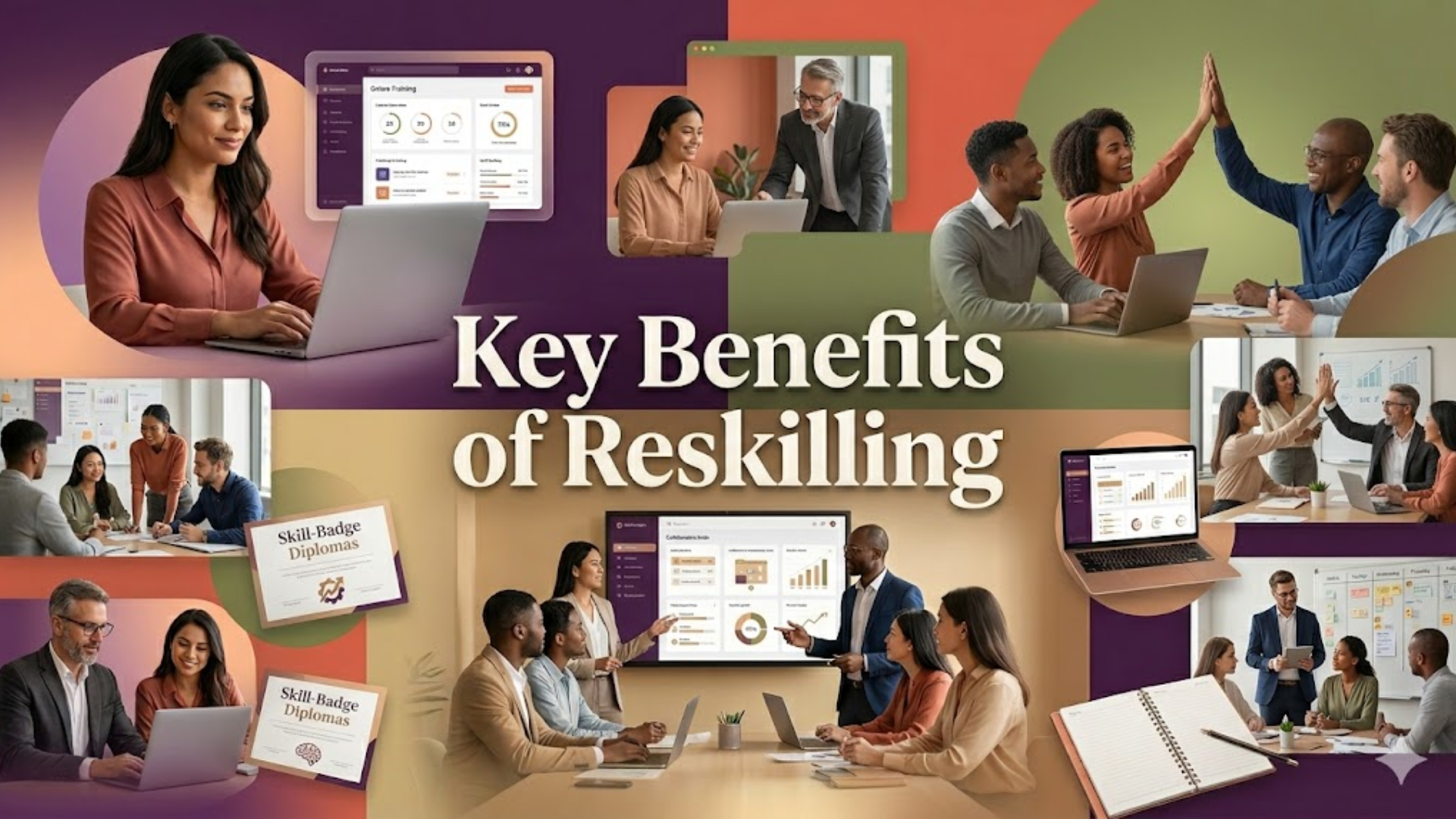
Reskilling creates advantages for both employees and employers.
Benefits for Employees
- Increased career opportunities
- Better job security
- Higher adaptability in changing industries
- Improved confidence and professional growth
Benefits for Businesses
- Lower recruitment costs
- Improved workforce productivity
- Faster adaptation to industry changes
- Stronger employee engagement
Organizations that prioritize learning often build teams that can adjust quickly to market shifts.
How Companies Implement Reskilling Programs
Successful reskilling requires planning and clear objectives. Businesses typically follow a structured approach.
Step 1: Identify Skill Gaps
Organizations assess which skills are missing and where future demand may arise.
Step 2: Offer Training Programs
This may include:
- Online learning platforms
- Workshops and mentoring
- Internal job rotation programs
- Certifications and technical courses
Step 3: Encourage Continuous Learning
Companies often promote habits like knowledge sharing and better time managment to help employees balance learning with daily work responsibilities.
Step 4: Measure Progress
Tracking employee performance helps determine whether training efforts are successful.
Common Challenges of Reskilling
Although reskilling offers many benefits, it also comes with challenges.
Resistance to Change
Some employees may feel uncertain about learning completely new skills.
Time Constraints
Balancing work responsibilities with training can be difficult.
Budget Limitations
Smaller organizations may struggle to invest in large-scale learning programs.
Despite these challenges, businesses that commit to workforce development often see long-term benefits.
Industries Where Reskilling Is Growing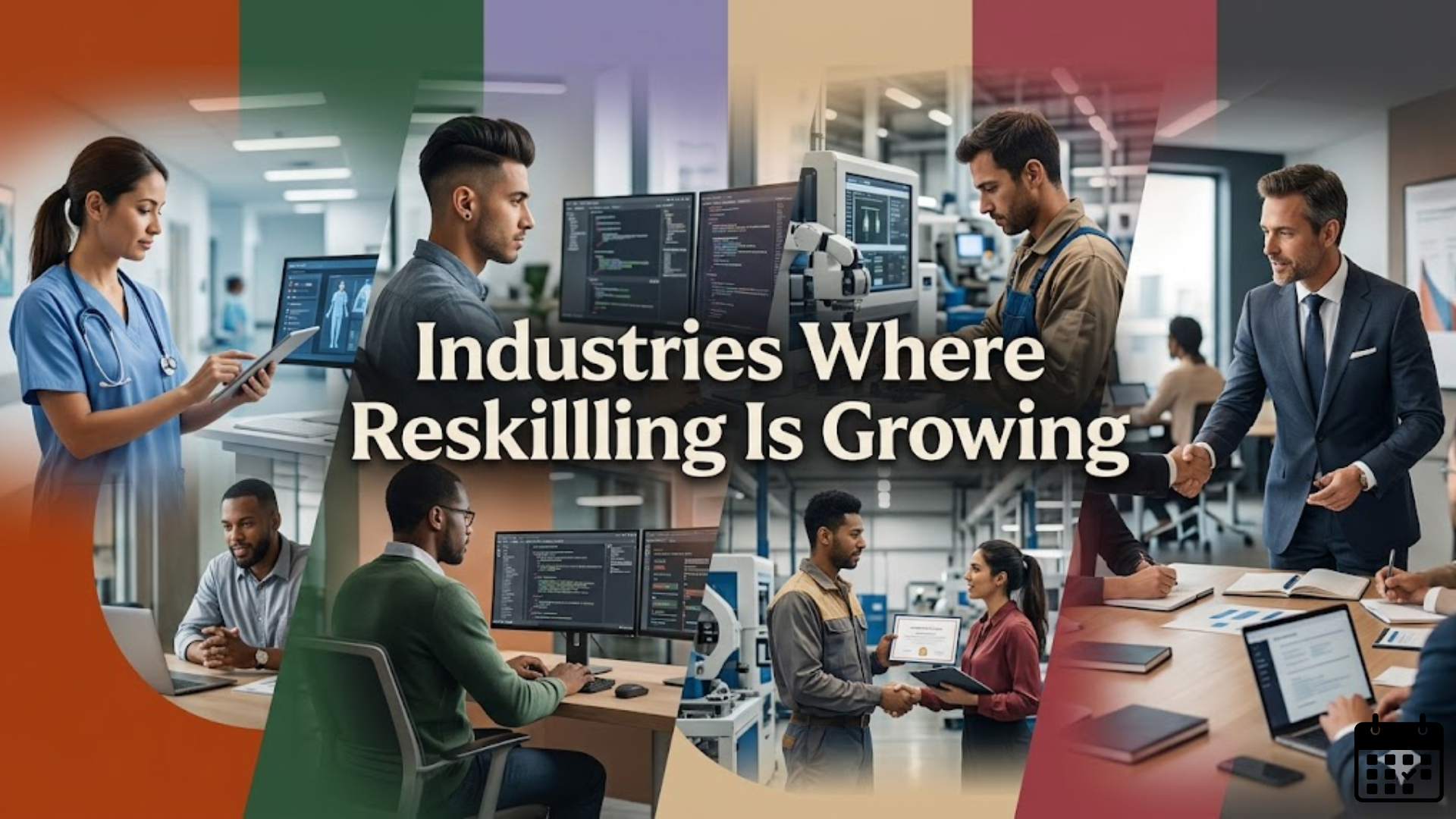
Several industries actively invest in reskilling due to rapid technological change.
Technology
Employees learn cloud computing, cybersecurity, and AI-related skills.
Healthcare
Medical staff train on digital healthcare systems and advanced technologies.
Manufacturing
Workers learn automation and robotics-related skills.
Finance
Professionals adapt to digital banking tools and financial technology platforms.
As industries evolve, what is reskilling becomes an increasingly important question for both employers and employees seeking long-term growth.
You can also watch this video: Emp Monitor | Boost Workplace Productivity with Employee Monitoring Software.
Summary
What is Reskilling is more than just learning something new—it is a practical strategy for adapting to workplace change. As industries continue to evolve, professionals who embrace learning are more likely to remain competitive and secure better opportunities. For businesses, reskilling helps reduce talent shortages, improve employee retention, and prepare teams for future demands. Investing in new skills today can create stronger career prospects and a more adaptable workforce tomorrow.
Frequently Asked Questions
What is the meaning of reskilling?
Reskilling means learning new skills to transition into a different role or adapt to changing workplace requirements.
Why is reskilling important?
It helps employees remain employable and enables businesses to fill skill gaps without relying solely on external hiring.
What is the difference between reskilling and upskilling?
Reskilling prepares someone for a new role, while upskilling improves skills for an existing position.
Which industries need reskilling the most?
Technology, healthcare, manufacturing, and finance are among the industries investing heavily in workforce reskilling.
How can employees start reskilling?
Employees can begin through online courses, certifications, mentorship, workshops, or employer-sponsored training programs.
Comments
Post a Comment